

What Is Waste Segregation? Types, Benefits, and How to Do It Right
Quick Answer
Waste segregation is the practice of separating waste into categories at the point where it is created, such as recyclables, organic waste, hazardous waste, electronic waste, construction debris, and medical waste, so each stream can be collected, treated, and disposed of correctly. It matters because mixed waste contaminates recyclables, increases landfill volume, creates safety risks, and can break regulations. To do it well, use clearly labeled containers, train everyone who handles waste, keep hazardous and medical waste strictly separate, and use a licensed contractor for collection. Globalex provides waste management, medical, clinical, pharmaceutical, and hazardous waste collection across Dubai.
Quick Facts
- Segregation works best at the source, where the waste is created.
- Hazardous and medical waste must never go into general waste containers.
- Mixing even a small amount of contaminated waste can spoil a whole batch of recyclables.
- Labeled containers, staff training, and a licensed collector are the three pillars of a working system.
Introduction
Most people have stood in front of a row of bins wondering where something goes. A greasy takeaway box, a dead battery, a broken phone charger, a half-empty paint tin. The confusion is understandable, and it has real consequences.
When waste goes into the wrong container, it affects what happens to everything around it. Recyclables become unusable, hazardous items injure waste handlers, and organic waste ends up producing methane in landfill.
This guide explains what waste segregation is, why it is important, what the main waste streams are, and how homes, offices, clinics, restaurants, and construction sites can set up a system that actually works in Dubai’s conditions.
What Is Waste Segregation
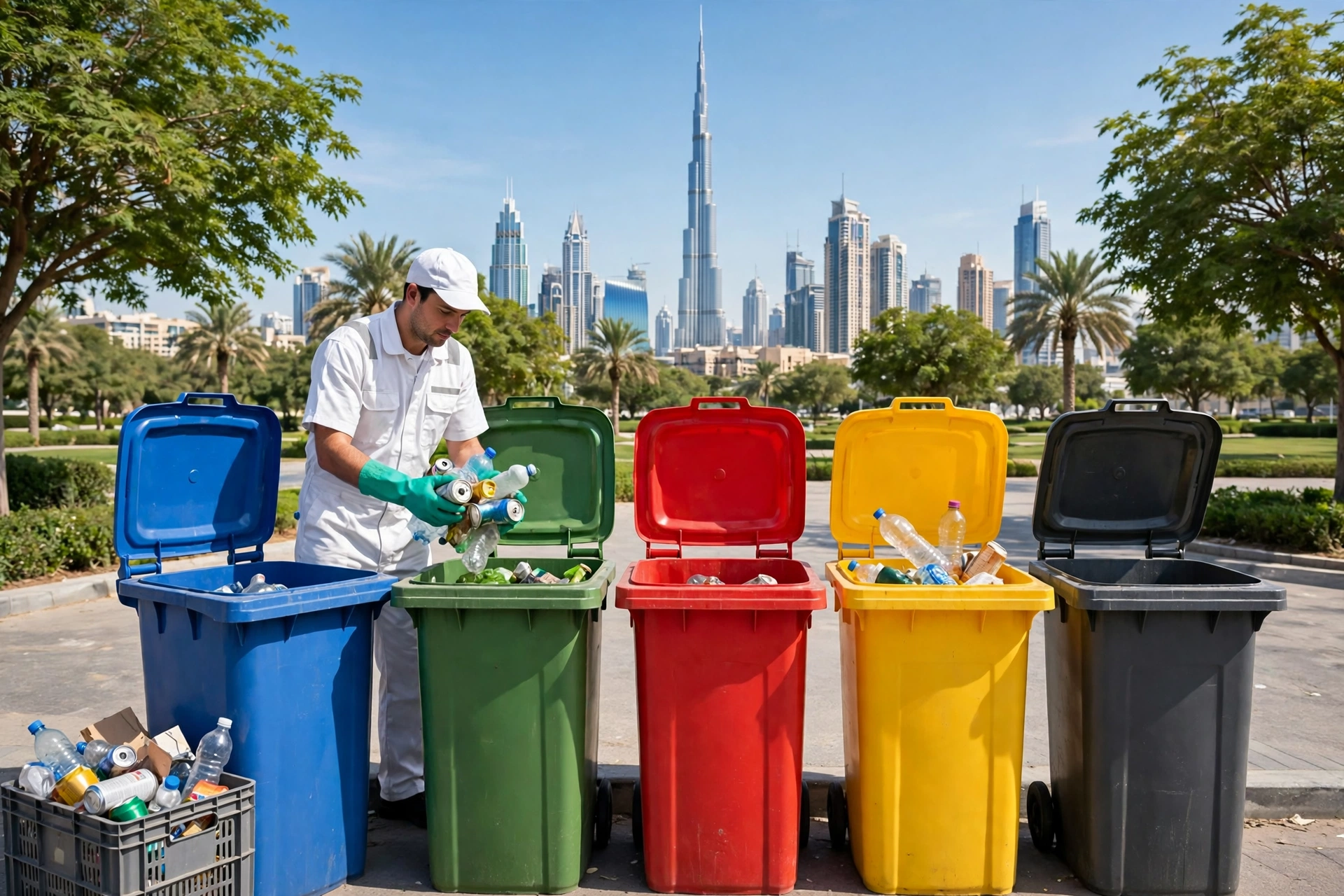
Waste segregation is the process of sorting waste into separate categories based on its type and how it should be handled, ideally at the place where it is generated. The goal is to keep each stream clean and compatible with the treatment or disposal route it needs.
Segregation is different from recycling. It is the step that makes recycling, safe treatment, and compliant disposal possible. You can recycle only what has been kept clean and separate.
The main waste streams are:
- Dry recyclables: paper, cardboard, plastics, metals, and glass.
- Organic or wet waste: food scraps, garden waste, and other biodegradable material.
- Hazardous waste: used oil, solvents, paints, chemicals, batteries, fluorescent tubes, and contaminated materials.
- Electronic waste: phones, computers, cables, and appliances.
- Construction and demolition waste: concrete, rubble, wood, metal, and site debris.
- Medical and clinical waste: sharps, infectious waste, pharmaceutical waste, and other healthcare waste.
- General or residual waste: items that cannot be recycled or treated in another stream.
Why Is Waste Segregation Important
It makes recycling possible. Recyclable materials lose value when they are contaminated by food, liquids, or other waste. One leaking container can ruin a bale of paper or plastic.
It protects people. Needles in general bins, chemicals mixed with other waste, and broken glass in soft bags injure cleaners, collectors, and sorting staff.
It protects the environment. Hazardous waste in landfill can leach into soil and groundwater, and organic waste breaks down without oxygen to produce methane, a potent greenhouse gas.
It reduces landfill. Pulling out recyclables and organics shrinks the amount that ends up buried.
It supports compliance. Dubai’s waste management framework, including Dubai Law No. 18 of 2024 as described in published guidance, expects hazardous waste to be handled separately and by authorized parties. Healthcare facilities face further requirements. Confirm the current rules for your activity with Dubai Municipality.
It lowers costs. Sending clean recyclables and organics through cheaper streams, and keeping hazardous waste out of general skips, avoids surcharges and rejected loads.
Key Benefits of Waste Segregation
Cleaner recycling streams. Higher quality means more material is actually recycled.
Safer workplaces. Fewer injuries, fewer spills, and fewer exposure incidents.
Lower disposal costs. Correct streams avoid penalty charges for contaminated loads.
Better compliance records. Separate streams make it easier to document what you generated and where it went.
Cleaner premises. Less mixed waste means less odor, fewer pests, and tidier storage areas.
A stronger reputation. Customers, tenants, and partners increasingly expect responsible waste handling.
Types of Waste Segregation
Segregation can be done in several ways, and many organizations combine them.
Source segregation. Waste is sorted where it is created, in the kitchen, treatment room, workshop, or site office. This gives the cleanest results and is the preferred approach.
Central or post-collection sorting. Mixed waste is sorted later at a facility. It is less efficient, because contamination has already happened.
Color-coded segregation. Containers use colors and labels to show what goes where. This is standard in healthcare, and our guide on color coding in medical waste management explains it in detail.
Hazard-based segregation. Waste is separated by risk: infectious, chemical, flammable, or toxic, so that incompatible items never meet.
Common Problems and Challenges
Unclear labels. People guess when bins are unmarked or when labels are small, faded, or in a language they do not read.
Contamination. Food residue in recycling bins, liquids in dry bins, and general waste in hazardous containers are the biggest causes of failure.
Not enough containers. If there is only one bin in a room, everything goes into it.
Poor training. New staff, cleaners, and contractors often do not know the rules.
Heat and odor. In Dubai, organic and medical waste stored in warm areas smells quickly and attracts pests, so storage placement matters.
Hazardous items in general waste. Batteries, paint, chemicals, and sharps are frequently thrown away as ordinary rubbish because people do not recognize them.
Weak records. Businesses may sort waste but have no register or certificates to show what happened afterward.
Important Factors to Consider
What waste you generate. List every stream your home, clinic, restaurant, workshop, or site produces. A restaurant has food waste, packaging, and grease. A clinic has sharps and infectious waste. A site has rubble, timber, and oils.
Volume and frequency. Collection schedules should match how fast containers fill, not a generic timetable.
Space. You need room for separate containers near where waste is created, and a safe storage area before collection.
Rules for your activity. Healthcare, industrial, and construction waste each have specific requirements, so check them with Dubai Municipality and your sector authority.
Your collector. Use a licensed contractor that can handle each stream you generate and provide documentation.
People. Segregation succeeds when everyone, including cleaners and temporary staff, knows what goes where.
Best Practices and Expert Recommendations
Segregate at the point of generation. Put the right container where the waste is created, not in a corridor down the hall.
Label every container clearly with words and pictures, and keep labels consistent across the site. Use color coding where it is the standard, as in healthcare.
Keep hazardous and medical waste completely separate from everything else. Never place them in general or recycling containers, and keep sharps in puncture-resistant containers.
Rinse or empty recyclable containers where practical, and keep liquids out of dry bins.
Store waste in the coolest practical place, away from direct sun and patient or customer areas. Heat accelerates odor, bacteria, and leaks.
Train new staff at induction, and run short refreshers once or twice a year. Include cleaners, security staff, and contractors who move waste.
Keep a simple register of what you generate and what leaves the site, and file disposal certificates by date.
Review your system regularly. If bins are overflowing or contaminated, change the container layout or the collection frequency, not just the reminders.
How Professional Services Help
A professional waste management company takes the part most organizations find hardest: what happens after segregation. They supply suitable containers, collect on a schedule that matches your volume, transport each stream correctly, and send it to the right treatment or disposal route.
They also bring documentation. Collection records and disposal certificates support your register and give you evidence if you are inspected. And an experienced provider can spot problems in your setup, such as mixed streams, missing labels, or overfilled containers, and show you how to fix them.
For businesses that generate several streams, such as clinics with sharps and pharmaceutical waste, or sites with hazardous and general waste, using one provider simplifies scheduling and paperwork.
Why Choose Globalex
Globalex provides waste management services in Dubai, including medical, clinical, pharmaceutical, and hazardous waste collection, alongside sewage water removal, wastewater, and water services.
We work with clinics, pharmacies, laboratories, hospitals, developers, and facility managers, and our clients include major names such as Emaar, Dubai Properties, and Dubai Municipality.
We advise on segregation, recommend containers and schedules that fit your waste, and provide documentation after collection. Waste goes through licensed disposal channels, and our quotes are clear before we start.
Because we handle both solid waste streams and liquid waste, we can often solve several problems with one provider, from clinic sharps to site wastewater. F.
Our Service Process
- Contact us with your property type and the waste streams you generate.
- We review your volumes and recommend containers, labeling, and a collection schedule.
- Our trained team collects waste on schedule, following correct handling procedures.
- Waste is transported and disposed of through licensed channels.
- We provide documentation and adjust the schedule as your needs change.
Frequently Asked Questions
What is waste segregation in simple words?
It means separating waste into different categories, such as recyclables, food waste, hazardous waste, and medical waste, so each type can be handled and disposed of correctly.
Why is waste segregation important?
It keeps recyclables clean, protects workers from injury, reduces landfill and pollution, helps meet regulations, and lowers disposal costs.
What are the main types of waste segregation?
Source segregation, central sorting after collection, color-coded segregation, and hazard-based segregation. Source segregation gives the best results.
Is waste segregation mandatory in Dubai?
Businesses are expected to handle hazardous and medical waste separately and through authorized parties, and healthcare facilities have specific rules. Requirements depend on your activity, so confirm them with Dubai Municipality and your sector authority.
What happens if hazardous waste is mixed with general waste?
It can injure collectors, contaminate other waste, and cause environmental harm. It can also lead to regulatory problems for the generator.
Can I put food-contaminated packaging in the recycling bin?
Heavily soiled items often cannot be recycled and can contaminate other recyclables. Empty and rinse containers where practical, and put badly soiled items in the correct residual or organic stream.
Who should be responsible for waste segregation in a business?
Everyone who creates waste, supported by clear labels, training, and a manager who checks that the system works.
Can Globalex help my business set up waste segregation?
Yes. We recommend containers and schedules for your waste streams, collect on a regular basis, and provide documentation after each collection.
Conclusion
Waste segregation is simple in principle and powerful in practice. Sorting at the source keeps recyclables usable, protects the people who handle waste, reduces landfill, and helps you meet your obligations.
Start with the basics: know your waste streams, put labeled containers where waste is created, keep hazardous and medical waste strictly separate, train your people, and work with a licensed collector.
Call to Action
Need help setting up waste segregation or collection for your business, clinic, or site in Dubai? Call Globalex at +971-55-9286666, message us on WhatsApp, or request a free quote at globalexuae.com. Tell us what waste you generate, and we will recommend a system and collection schedule.

