

Septic Tank vs Sewage Tank in Dubai: What Is the Difference?
Quick Answer: A septic tank treats wastewater on your property. Solids settle at the bottom, bacteria break part of them down, and the clarified liquid drains into the ground through a soakaway. A sewage tank (also called a holding tank or cesspit) does no treatment. It only stores wastewater until a vacuum tanker empties it. In Dubai, septic tanks need periodic sludge removal, while sewage tanks need regular and more frequent emptying. Both are used where a property has no direct connection to the public sewer, and both should only be emptied by a company that disposes of the waste at an approved facility.
Most Dubai property owners use the two terms as if they mean the same thing. They do not, and mixing them up leads to wrong service bookings, wasted money, and sometimes an overflow at the worst possible moment.
This guide explains septic tank vs sewage tank in Dubai in plain terms: how each system works, which one you probably have, what goes wrong, and how often each needs professional attention.
What Is the Difference Between a Septic Tank and a Sewage Tank?
The core difference is simple. A septic tank is a small treatment system. A sewage tank is a storage container.
How a septic tank works
A septic tank is a buried, watertight chamber, usually concrete or fibreglass, that receives wastewater from toilets, sinks, showers, and laundry. Inside, three layers form:
- Scum layer: fats, oils, and light solids float to the top.
- Effluent (middle layer): relatively clear liquid.
- Sludge layer: heavy solids sink to the bottom, where anaerobic bacteria slowly digest part of them.
The middle liquid flows out through an outlet pipe into a soak pit, soakaway, or drain field, where the soil filters it further. The tank itself never fills with liquid permanently, because liquid keeps leaving. What fills up over time is the sludge and scum.
How a sewage tank works
A sewage tank, often called a holding tank, cesspit, or collection tank, is sealed. Wastewater goes in and stays in. There is no soakaway and no outlet. The only way out is a sewage tanker with a vacuum pump that removes the contents and carries them to a sewage treatment plant (STP).
Because nothing leaves on its own, a sewage tank fills with liquid. It may be full in days or weeks depending on its volume and how many people use the property.
| Feature | Septic tank | Sewage tank (holding tank) |
|---|---|---|
| Main function | Partial on-site treatment | Storage only |
| Outlet to soil | Yes, via soakaway or drain field | No, fully sealed |
| What accumulates | Sludge and scum | All wastewater |
| Emptying frequency | Every few years, based on size and use | Frequent, often weekly to monthly |
| Emptying method | Vacuum tanker removes sludge and liquid | Vacuum tanker removes everything |
| Overflow risk when neglected | Backups, soakaway failure, odour | Fast overflow once the tank is full |
A note on terminology: in everyday Dubai conversation, many people say “sewage tank” for both systems, and some contractors use the words loosely. If you are not sure which one you have, ask for an inspection before you book. It changes the service you need.
Why Septic Tank vs Sewage Tank Matters in Dubai
Most of Dubai is connected to the public sewer network, so many residents never think about their tank. But connection is not universal. Older villas, farms, labour accommodation, warehouses, and properties in developing or remote areas may still rely on on-site systems.
Knowing the difference matters for four practical reasons:
- Cleaning schedule. A septic tank and a holding tank need very different service intervals. Treating a holding tank like a septic tank means overflow.
- Cost control. Emergency tanker calls cost more than planned pumping. Knowing your system helps you plan.
- Compliance. Wastewater must be removed and disposed of through approved channels. Illegal dumping can bring fines and legal trouble. Our guide to Dubai Municipality rules for sewage tank cleaning covers what property owners need to know.
- Health and property protection. Raw sewage carries pathogens. A failed tank can contaminate soil, damage foundations, and make a building unusable.
Key Benefits of Understanding and Maintaining Your Tank
Once you know which system you have and keep it serviced on time, you get real, measurable advantages:
- Fewer emergencies. Planned emptying is cheaper and calmer than an overflow at midnight.
- Longer system life. A septic tank with regular sludge removal protects its soakaway, which is the most expensive part to replace.
- No odour complaints. Neighbours, tenants, and guests notice smell quickly in Dubai’s heat.
- Lower health risk. Sealed, well-maintained tanks keep pathogens and gases contained.
- Smoother tenancy and inspections. Landlords and facility managers avoid disputes over blocked drains and sewage smell.
Common Problems and Challenges
Septic tank problems
- Sludge buildup. When sludge rises too high, solids escape into the soakaway and clog it.
- Soakaway failure. A clogged soak pit stops absorbing liquid, and water backs up into the house.
- Grease and chemical damage. Cooking fat blocks pipes. Strong bleach and harsh cleaners kill the bacteria that digest waste.
- Hot-weather odour. High temperatures speed up gas release, so a neglected tank smells worse in summer.
Sewage (holding) tank problems
- Fast filling. More occupants or a sudden guest load can fill the tank in days.
- Missed pickups. If nobody tracks the fill level, overflow follows.
- Cracks and leaks. A damaged tank leaks into surrounding soil.
- Blocked inlets. Wipes, rags, and construction debris jam the pipework before the tank.
Shared warning signs
Watch for slow drains, gurgling pipes, sewage smell near the tank cover, wet or unusually green patches of ground, and toilets that back up. Our checklist of 7 signs your sewage tank needs cleaning explains each one. If wastewater is already coming up, read what to do in an emergency sewage overflow.
Important Factors to Consider
When deciding how to maintain your system or which service to book, think about these points:
- System type. Confirm whether you have a septic tank with a soakaway or a sealed holding tank. Check the property plans or request an inspection.
- Tank size. A larger tank lasts longer between pumpouts.
- Number of users. A family villa and a labour camp generate very different volumes.
- Water use. Heavy laundry, frequent guests, or a restaurant kitchen shorten service intervals.
- Access. Tankers need clear access to the manhole. Blocked covers, parked cars, or narrow lanes cause delays.
- Season. Summer heat and higher water use often mean faster filling and stronger odours.
- Disposal route. Ask where the waste goes. Reputable companies transport it to approved treatment facilities, not to open land or drains.
Best Practices and Expert Recommendations
After years of handling tank calls across Dubai, these habits make the biggest difference:
For septic tanks
- Schedule sludge removal on a regular cycle rather than waiting for symptoms. Guidance commonly suggests every three to five years for a typical household system, but heavy use in Dubai may shorten that. A professional can measure sludge depth and set the right interval.
- Keep fats, oils, and grease out of the drains.
- Use mild, septic-safe cleaning products. Excess bleach harms the bacterial balance.
- Never drive or park over the tank or soakaway.
- Spread water-heavy tasks, such as multiple laundry loads, across the week.
For sewage (holding) tanks
- Track fill level and book pickups before the tank is full, not after.
- Keep a service log with dates, volumes, and the company used.
- Install a level indicator or alarm if your tank has none.
- Inspect the tank walls and cover for cracks at each service.
For both
- Flush only toilet paper and human waste. Wipes, sanitary products, and rags cause blockages.
- Keep the manhole cover accessible and sealed.
- Use a licensed provider and ask for disposal documentation.
- Treat any sewage smell or damp ground as urgent.
How Professional Services Help
A tank is not a do-it-yourself job. Sewage contains harmful bacteria and gases such as hydrogen sulphide and methane, which are dangerous in confined spaces. Professionals bring the equipment, safety procedures, and disposal access that homeowners do not have.
Here is what a proper service covers:
- Inspection: identifying the tank type, size, condition, and fill or sludge level.
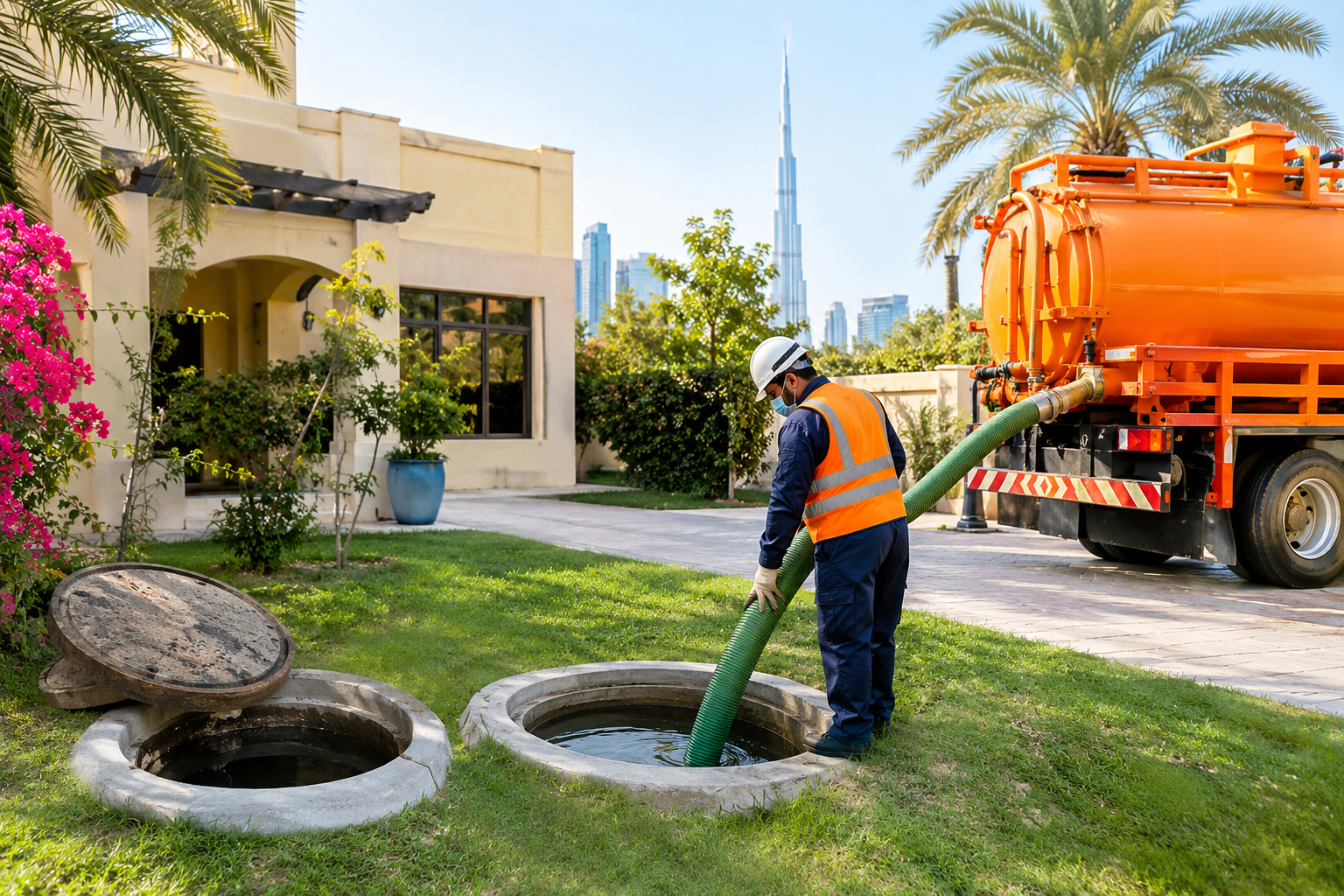
- Vacuum tanker removal: pumping out sludge, scum, and liquid safely.
- High-pressure water jetting: cleaning tank walls and clearing blocked inlet and outlet pipes. See our tank cleaning services.
- Pipeline clearing: removing blockages that cause backups. Read more about blocked pipelines in Dubai.
- Safe disposal: transporting waste to approved treatment facilities.
- Advice: recommending a realistic cleaning schedule for your specific system.
Choosing the wrong provider can leave you with illegal dumping liability and a tank that is only half cleaned. Our guide on how to choose a sewage tanker company in the UAE lists the questions worth asking.
Why Choose Globalex
Globalex is a Dubai-based group of companies providing sewage removal, tank cleaning, water tanker, TSE water, and medical waste services across the UAE. Our clients include developers, municipal-linked entities, hospitality groups, and facility managers, as well as villa owners.
What property owners value most:
- Dedicated fleet. Sewage tankers in different capacities for villas, buildings, and industrial sites.
- Full-service range. One company for sewage removal, tank cleaning, pipeline unblocking, and water supply.
- Responsive service. Phone and WhatsApp booking, including urgent callouts.
- Authorised liquid waste removal. We remove liquid waste through proper channels, not through shortcuts.
- Clear advice. We tell you what your system needs, not what is most expensive.
Our Service Process
- Contact and assessment. Call or WhatsApp us with your location, tank type if known, and the problem you see.
- Site visit or remote triage. We confirm access, tank size, and urgency.
- Quote. You receive a clear price before work begins.
- Tanker dispatch. A vacuum tanker arrives with trained operators.
- Pumping and cleaning. We remove contents, jet the walls where needed, and clear connected pipes.
- Inspection and report. We check the tank condition and note any cracks, blockages, or soakaway concerns.
- Safe disposal. Waste is transported to an approved facility.
- Follow-up advice. We recommend a service interval based on what we found.
Frequently Asked Questions
Is a septic tank the same as a sewage tank in Dubai?
No. A septic tank partly treats wastewater and releases the liquid into a soakaway. A sewage tank only stores wastewater until a tanker empties it. Many people use the terms interchangeably, so confirm which one you have before booking.
How often should I empty a septic tank or sewage tank in Dubai?
A septic tank usually needs sludge removal every few years, depending on size and occupancy. A sewage holding tank needs much more frequent emptying, often weekly to monthly. A professional inspection gives the most accurate schedule.
How do I know which type of tank I have?
Check whether the tank has an outlet pipe leading to a soak pit or drain field. If it does, it is a septic tank. If the tank is sealed with only an inlet and a manhole, it is a holding tank. Property drawings or an inspection will confirm it.
Can I clean a septic or sewage tank myself?
We strongly advise against it. Toxic gases, pathogens, and confined spaces make it dangerous. Professionals use vacuum tankers, gas awareness procedures, and approved disposal routes.
What happens if I do not clean my tank on time?
A septic tank can clog its soakaway and back up into the property. A holding tank overflows once full. Both cause odour, health risks, property damage, and costly emergency callouts.
Does Dubai require licensed companies to dispose of sewage?
Wastewater must be removed and disposed of through approved channels, and illegal dumping can lead to penalties. Always ask your provider where the waste goes and request documentation. Our Dubai Municipality sewage tank rules guide explains the details.
Why does my tank smell worse in summer?
Heat speeds up bacterial activity and gas release, and water use tends to rise. A tank that is close to full or poorly sealed will smell stronger. Treat persistent odour as a sign to inspect and empty the tank.
Conclusion
The difference between a septic tank and a sewage tank in Dubai comes down to function. A septic tank treats and releases liquid on site and needs periodic sludge removal. A sewage tank stores everything and needs frequent emptying. Knowing which one you own is the first step to avoiding overflows, odours, and emergency bills.
If you are unsure, do not guess. A short inspection tells you what you have and how often it needs service.
Call to Action
Need your septic or sewage tank emptied, inspected, or cleaned in Dubai?
Globalex responds quickly and keeps pricing clear.
- Call: +971-55-9286666
- WhatsApp: Message us now
- Email: gm@globalex.ae
- Request a free quote: Book your sewage removal service
Tell us your location and tank type, and we will send a tanker.

