

Aesthetic Clinic and Med Spa Waste Disposal in Dubai: Needles, Fillers, and Botox Vials
Quick Answer: Aesthetic clinic waste disposal in Dubai means sorting every item at the treatment chair into the right stream: sharps (needles, cannulas, thread cannulas, micro-needling tips), infectious waste (blood-contaminated gauze, PRP tubes, gloves), pharmaceutical waste (used and expired botulinum toxin, filler, and injectables), chemical waste (peels and solutions), and general waste. Store each in labeled, color-coded containers in a restricted area, never mix medical items into general bins, and hand them to a licensed medical waste collection contractor under contract. Keep a waste register and disposal certificates for inspections. Globalex collects medical, clinical, and pharmaceutical waste across Dubai with documentation after every collection.
Quick Facts
- Needles, cannulas, and any item with a sharp point go into puncture-resistant sharps containers.
- Leftover or expired Botox, filler, and injectables are pharmaceutical waste, not general waste.
- Follow the manufacturer’s disposal instructions for botulinum toxin and ask your contractor how to route it.
- Keep a waste register and disposal certificates ready for inspection.
Introduction
Dubai’s aesthetic industry keeps growing. New clinics and med spas open across the emirate every year, offering injectables, fillers, skin boosters, thread lifts, laser, PRP, and IV therapies.
Each treatment leaves something behind. A single filler appointment can produce a used syringe and needle, an empty vial, blood-spotted gauze, and gloves, all within a few minutes.
That makes aesthetic clinic waste disposal in Dubai a daily operational task, not an occasional one. This guide explains what waste an aesthetic practice produces, how to handle each stream, and how to work with a collection partner so your clinic stays safe and inspection-ready.
What Is Aesthetic Clinic Waste Disposal
Aesthetic clinic waste disposal is the controlled handling of waste from cosmetic and med spa treatments, from sorting at the treatment room to storage, collection by a licensed contractor, treatment or destruction, and record-keeping.
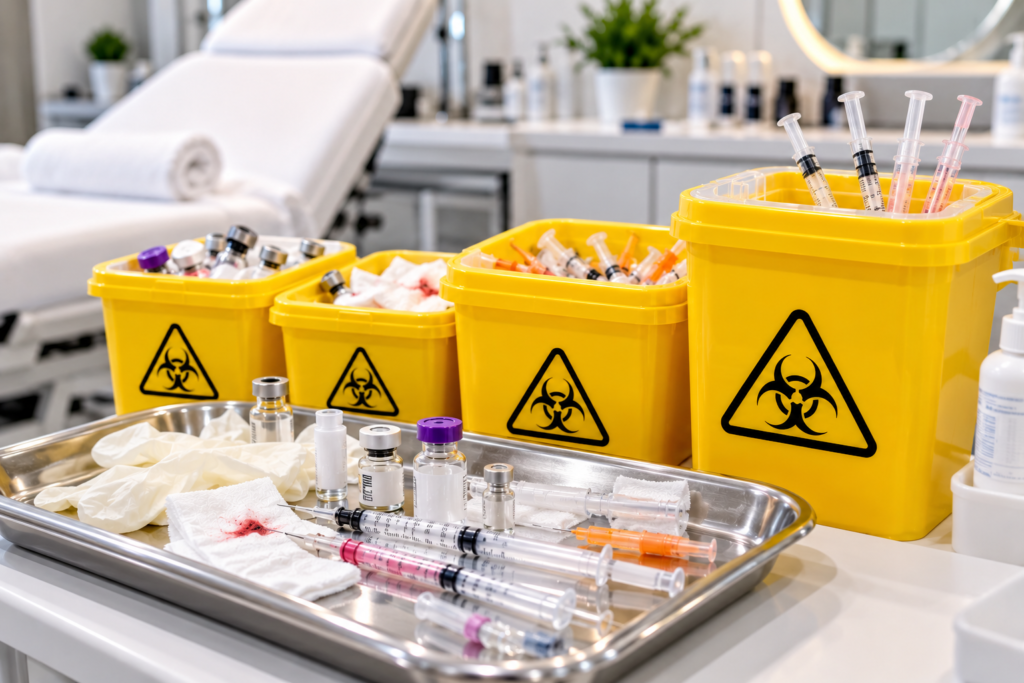
An aesthetic practice typically generates these streams:
- Sharps: injection needles, filler cannulas, thread-lift cannulas, micro-needling cartridges and needles, mesotherapy needles, and scalpel blades.
- Infectious waste: gauze, cotton, and gloves contaminated with blood, plus PRP and blood collection tubes.
- Pharmaceutical waste: used, leftover, and expired botulinum toxin vials, filler syringes, skin boosters, local anesthetics, and other injectables.
- Chemical waste: chemical peel solutions, disinfectants, and other treatment chemicals.
- General waste: packaging, paper, wipes, and non-contaminated items.
The mix is smaller in volume than a hospital’s, but it is just as regulated, and the risk per item can be high.
Why Aesthetic Clinic Waste Disposal Matters in Dubai
Patient safety and staff safety come first. A needlestick injury from an unprotected syringe can expose a nurse, a cleaner, or a waste handler to bloodborne infection. Discarded injectables in general waste can also reach people who were never meant to handle them.
Regulation is the second driver. Dubai expects health facilities to segregate medical waste at source and use an approved contractor for collection. Facilities are also expected to keep records of what they generate and dispose of. Inspectors can ask for that evidence.
Reputation is the third. Aesthetic clinics sell trust. A visibly well-run waste routine supports the image of a safe, professional practice, while an overflowing sharps bin or unlabeled bag in a corridor does the opposite.
Key Benefits of Proper Waste Handling
- Safer staff and patients. Correct containers and routines cut needlestick risk for everyone who touches waste.
- Inspection readiness. A register, certificates, and labeled storage show a controlled operation.
- Environmental protection. Pharmaceutical and chemical waste stay out of drains and landfill.
- Cost control. Correct segregation stops general waste from being charged as medical waste.
- Brand protection. Clean, well-managed handling supports the premium image aesthetic clinics depend on.
Common Problems and Challenges
- Sharps in the wrong place. Needles tossed into ordinary bins, or sharps containers kept out of reach, push staff to improvise.
- Overfilled containers. Busy clinics keep pressing needles into a full container until something pokes out.
- Unclear vial handling. Many clinics are unsure whether empty vials, partly used vials, and expired stock belong with sharps, pharmaceutical waste, or general waste.
- Expired product build-up. Fillers, boosters, and injectables expire in cupboards and fridges, and nobody schedules their removal.
- Mixed streams. Chemical peel waste, PRP tubes, and gloves end up in the same bag.
- Weak records. Waste leaves the clinic, but there is no register or certificate when an inspector asks.
- Heat. In Dubai’s climate, waste stored in a warm corridor or car park can smell and degrade quickly, so storage conditions matter.
Important Factors to Consider
- Treatment mix. A clinic that does mostly laser and skin care generates far less sharps waste than one that runs high-volume injectables, threads, and PRP. Match containers and collection frequency to your real mix.
- Container quality. Use puncture-resistant sharps containers with secure lids, and clearly labeled, color-coded containers for other streams. See our guides on color coding in medical waste management and the types of medical waste for details.
- Storage area. Keep a designated, ventilated, labeled space with restricted access, away from patients and public view.
- Contractor approval. Confirm that your waste company is approved to collect and transport medical waste in Dubai, and ask what documentation you will receive after each collection.
- Pharmaceutical routing. Ask how the contractor handles expired and leftover injectables, since they follow a different route from sharps and infectious waste.
- Staff training. Doctors, nurses, assistants, and cleaners all need to know the rules, including part-time and visiting practitioners.
Best Practices and Expert Recommendations
Put the right container in every treatment room. Staff should not need to walk to a corridor to dispose of a needle.
Dispose of needles and cannulas immediately after use, without recapping or bending. Replace sharps containers before they are completely full. A common practice is to close and replace them at about three-quarters full.
Treat botulinum toxin and filler leftovers as pharmaceutical waste. Follow the manufacturer’s disposal instructions for each product, and ask your contractor how to package and route them.
Run a monthly expiry check. Pull expired fillers, boosters, anesthetics, and creams from cupboards and fridges, and place them in your pharmaceutical stream instead of letting them accumulate.
Keep chemical peel solutions and disinfectant waste separate from other streams, in labeled, sealed containers.
Keep a waste register. Record the type and approximate quantity of each stream, and file disposal certificates by date.
Train every practitioner and cleaner at induction, and refresh the training once or twice a year. Post simple color and label guides at waste points.
Store waste in the coolest practical place. Avoid warm corridors, direct sun, and car parks, because heat speeds odor and bacterial growth.
Agree a collection schedule with your contractor, and revisit it whenever you add treatments, rooms, or opening hours.
How Professional Services Help
A professional medical waste collector handles the chain after the waste leaves your clinic: supplying suitable containers, collecting on a regular schedule, transporting hazardous waste in line with Dubai requirements, and sending it for treatment or destruction.
They also give you documentation after each collection, which supports your register and your inspection file. An experienced provider can spot problems quickly, such as overfilled sharps containers, mixed streams, or unlabeled bags, and explain how to fix them.
Because aesthetic clinics generate both sharps and pharmaceutical waste, using one provider for both keeps scheduling, containers, and records in one place.
Why Choose Globalex
Globalex provides medical, clinical, and pharmaceutical waste collection across Dubai for clinics, pharmacies, laboratories, and hospitals. We understand the waste an aesthetic practice produces and structure collection around your real treatment volume, from a boutique med spa to a multi-room cosmetic center.
Every collection comes with documentation for your records, and waste goes through licensed disposal channels. We give clear quotes, flexible schedules, and practical segregation advice so your team knows exactly what goes where.
Our wider work for major names including Emaar, Dubai Properties, and Dubai Municipality means we are used to strict standards and tight schedules, and we bring the same discipline to every healthcare client.
Our Service Process
- Contact us with your clinic type, treatment mix, and the waste streams you generate.
- We recommend containers and a collection schedule that match your volume.
- Our trained team collects waste on schedule, following correct handling procedures.
- Waste is transported and disposed of through licensed channels.
- We provide documentation after each collection and adjust the schedule as your clinic grows.
Frequently Asked Questions
How should an aesthetic clinic in Dubai dispose of used needles?
Place them in a puncture-resistant sharps container immediately after use, without recapping, and have the container collected by an approved medical waste contractor.
How do I dispose of empty and expired Botox vials?
Follow the manufacturer’s disposal instructions for the product, treat leftover and expired vials as pharmaceutical waste, and ask your contractor how to package them for collection.
Where do used filler syringes go?
Syringes with attached needles or cannulas go into sharps containers. Leftover filler product follows the pharmaceutical route, so ask your contractor how to separate them.
Can med spas put gloves and gauze in general waste?
Not if they are contaminated with blood or bodily fluids. Those belong in the infectious waste stream, in labeled, color-coded containers.
What records should an aesthetic clinic keep?
A register of the type and approximate quantity of waste generated, plus disposal certificates from your contractor. Inspectors can ask to see them.
How often should an aesthetic clinic schedule waste collection?
It depends on treatment volume. Many clinics use weekly or bi-weekly collection, and busy injectable practices may need more frequent pickups. Review it whenever your treatment mix changes.
Can Globalex collect sharps and pharmaceutical waste together?
Yes. We collect clinical and pharmaceutical waste as part of one scheduled service, with documentation after every collection.
Conclusion
Aesthetic treatments look clean, but the waste they create is not ordinary. Needles, filler syringes, botulinum toxin vials, and blood-contaminated items each need their own container and route.
Sort at the treatment chair, store waste safely, keep a clear register, and work with a licensed collector. That approach protects your team and patients, keeps you inspection-ready, and supports the trusted image your clinic is built on.
Call to Action
Need dependable waste collection for your aesthetic clinic or med spa in Dubai? Call Globalex at +971-55-9286666, message us on WhatsApp, or request a free quote at globalexuae.com. Tell us your treatment mix and clinic size, and we will set up a collection schedule with full documentation.

