

Medical Waste Segregation Rules for Clinics & Labs in Dubai
Dubai’s healthcare sector is growing fast. New clinics, dental practices, diagnostic laboratories, and day-surgery centers are opening across the emirate every year. With that growth comes a sharper focus from regulators on how medical waste is handled, and segregation at the source has become one of the most strictly enforced requirements for every licensed facility.
If you run a clinic, lab, or dental practice in Dubai, understanding medical waste segregation rules is not optional. It directly affects your operating license, your inspection scores, and the safety of your staff and patients. At Globalex, we work with healthcare facilities across Dubai every day to manage this exact challenge, and this guide walks through what proper segregation actually looks like in practice.
What Is Medical Waste Segregation
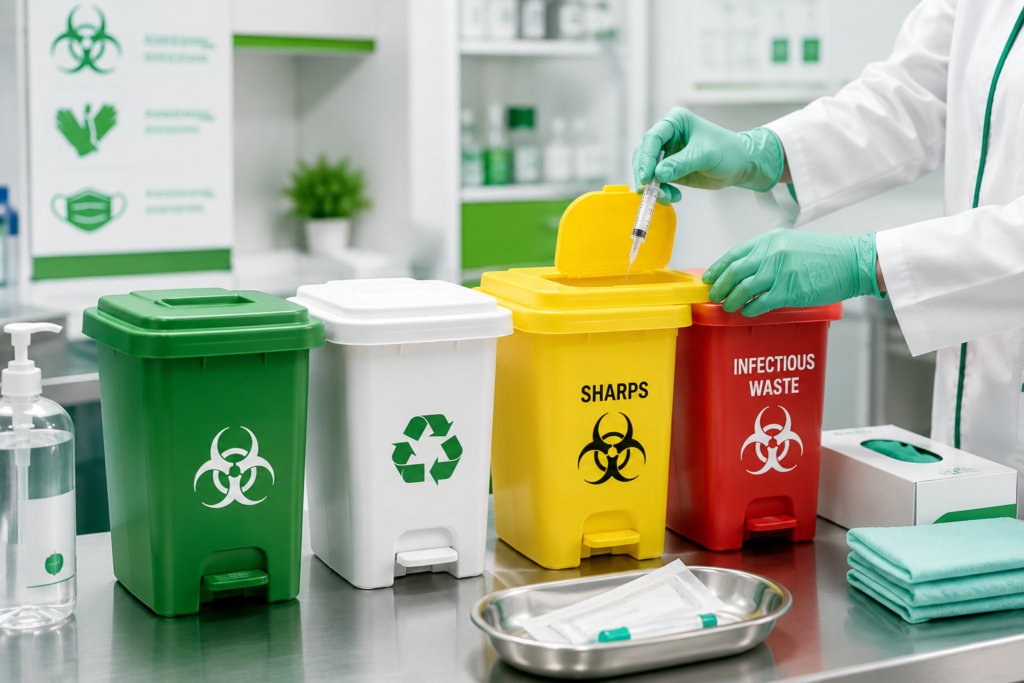
Medical waste segregation is the process of separating different categories of clinical waste at the exact point where it is generated, rather than mixing everything into a single bin. This means sorting sharps, infectious materials, pathological waste, pharmaceutical waste, and general non-hazardous waste into their own designated, color-coded containers from the moment they are produced.
Segregation is not a housekeeping task handled at the end of the day. It happens in real time, at the treatment table, the lab bench, or the procedure room, by the staff member generating the waste.
Why Segregation at the Source Matters
Segregation matters because medical waste is classified as hazardous for a reason. It can carry infectious pathogens, sharp injury risks, and toxic residues that put staff, waste handlers, and the public at risk if mishandled.
Both Dubai Municipality and the Dubai Health Authority treat this as a compliance priority. Dubai Municipality governs the physical handling chain, including licensed contractors, approved disposal facilities, and the documentation required for every collection. The Dubai Health Authority, on the other hand, scores waste management as a standalone section during facility inspections, and poor performance here can directly affect your operating license.
Mixing hazardous or medical waste with general waste is treated as a serious offense, and facilities have faced fines running into the hundreds of thousands of dirhams for non-compliance. Beyond the financial risk, improper segregation also increases the chance of needle-stick injuries, cross-contamination, and environmental harm.
Key Benefits of Proper Waste Segregation
Getting segregation right delivers real, measurable benefits for any healthcare facility:
- Regulatory compliance – Correct segregation keeps you aligned with both Dubai Municipality and DHA requirements, protecting your license.
- Reduced risk of injury – Sharps kept separate and properly contained dramatically lower the chance of needle-stick injuries among staff and waste handlers.
- Lower disposal costs – Since hazardous and medical waste is charged at a significantly higher rate than general waste, keeping non-hazardous waste out of medical waste streams reduces unnecessary disposal costs.
- Cleaner audit trail – Proper documentation through the Waste Transfer Note system makes inspections faster and less stressful.
- Better patient trust – Visible, professional waste handling reinforces confidence in your facility’s hygiene and safety standards.
Common Problems and Challenges
Even well-run clinics run into recurring segregation issues:
Mixing waste categories. Sharps, contaminated dressings, and general waste sometimes end up in the same bin, especially during busy shifts or in smaller practices without a dedicated waste protocol.
Inconsistent staff training. Untrained or new staff members are one of the most common sources of segregation errors, since correct sorting depends entirely on people knowing the categories and containers by heart.
Incorrect container use. Using the wrong color-coded bin, or reusing containers not rated for medical waste, is a frequent inspection finding.
Overflowing sharps containers. Sharps bins that are not swapped out on schedule create injury risks and compliance red flags.
Missing documentation. Facilities sometimes fail to properly log every collection through the required digital waste transfer system, which creates gaps in the compliance trail during audits.
Important Factors to Consider
When setting up or reviewing your facility’s segregation process, keep these factors in mind:
Waste categories generated on site. Different facility types generate different waste streams. A dental practice may deal primarily with sharps and contaminated single-use items, while a diagnostic lab may generate pathological samples and reagents.
Container standards. All medical waste containers must be UN-approved, puncture-resistant where needed, and clearly labeled with biohazard markings in the correct color code.
Storage duration and conditions. Medical waste cannot sit indefinitely on site. Storage areas need proper temperature control, restricted access, and clear signage.
Collection frequency. Facilities generating higher waste volumes need more frequent collection schedules to avoid overflow and storage compliance issues.
Licensed contractor selection. Only a Dubai Municipality-licensed waste contractor can legally collect, transport, and dispose of medical waste, and every collection must generate proper documentation.
Best Practices and Expert Recommendations
From our experience managing medical waste collection for clinics and labs across Dubai, a few practices consistently separate compliant facilities from those that struggle during inspections.
Start with clear, visible signage at every point of waste generation, not just in the storage room. Staff should never have to guess which bin a used item belongs in.
Build segregation training into onboarding for every clinical and lab staff member, and refresh it periodically rather than treating it as a one-time session. Most segregation errors come down to a gap in training, not carelessness.
Set fixed replacement schedules for sharps containers rather than waiting until they are full. A container nearing three-quarters capacity should already be scheduled for replacement.
Keep a dedicated, access-controlled storage area for medical waste that is separate from general waste storage, and ensure it is included in your regular facility inspection checklist.
Finally, work with a single licensed waste partner who understands both the collection logistics and the documentation requirements, so your Waste Transfer Note records stay complete and audit-ready at all times.
How Professional Services Help
A professional medical waste management partner does far more than pick up bins. A properly licensed provider assesses your facility’s specific waste streams, recommends the right container setup, manages collection scheduling based on your actual volume, and ensures every pickup is properly documented for compliance purposes.
This matters most for smaller clinics and labs that do not have a dedicated compliance officer on staff. Instead of trying to interpret municipal and health authority requirements internally, a professional partner brings that expertise directly to your facility, reducing the risk of costly mistakes during inspections.
For larger hospitals and multi-site healthcare groups, professional waste management also brings consistency across locations, ensuring every branch follows the same segregation standards and reporting process.
Why Choose Globalex
Globalex has extensive experience supporting healthcare facilities across Dubai with compliant medical and hazardous waste management. A few reasons clinics, labs, and dental practices choose to work with us:
- We are recognized among the region’s leading liquid and hazardous waste management providers, with one of the largest fleets in the UAE.
- Our operations comply fully with Dubai Municipality standards for the collection, transport, and disposal of hazardous and medical waste.
- We work with major institutional clients across Dubai, reflecting the level of trust placed in our compliance and service standards.
- Beyond medical waste, we also offer sewage removal, tank cleaning, and general facility waste services, allowing healthcare facilities to consolidate multiple waste streams with one licensed provider.
Our Service Process
Partnering with Globalex for medical waste management follows a simple process:
- Site assessment – We review your facility type, waste categories, and volume to recommend the right container and collection setup.
- Container placement – We help set up compliant, color-coded, labeled containers at the correct points of generation.
- Scheduled collection – We arrange a collection frequency matched to your actual waste volume, avoiding both overflow and unnecessary cost.
- Documentation – Every collection is properly logged, giving you a clean, audit-ready compliance trail.
- Ongoing support – We stay available for schedule adjustments, additional training guidance, and urgent collection needs as your facility grows.
Frequently Asked Questions
1. What categories of medical waste need to be segregated?
Common categories include sharps, infectious or contaminated materials, pathological or anatomical waste, expired pharmaceuticals, and general non-hazardous waste. Each requires its own designated, labeled container.
2. Who is responsible for segregating medical waste correctly?
The staff member generating the waste, whether a nurse, technician, or lab worker, is responsible for placing it in the correct container at the point of generation. Facility management is responsible for training and oversight.
3. What happens if medical waste is not properly segregated in Dubai?
Improper segregation can lead to significant fines, inspection failures, and in serious cases, license suspension. It also increases health and safety risks for staff and waste handlers.
4. How often should sharps containers be replaced?
Sharps containers should be replaced well before they reach full capacity, typically once they are around three-quarters full, to avoid overflow and injury risk.
5. Can a clinic use its own staff to transport medical waste off site?
No. Medical waste must be collected, transported, and disposed of by a Dubai Municipality-licensed waste contractor, with proper documentation generated for every collection.
6. Does segregation apply to small clinics and dental practices, or only large hospitals?
Segregation requirements apply to every facility generating medical waste, regardless of size, including single-practitioner clinics and dental offices.
Conclusion
Medical waste segregation is one of the most closely monitored compliance areas for any healthcare facility in Dubai, and for good reason. It protects staff from injury, prevents environmental harm, and keeps your facility aligned with both Dubai Municipality and Dubai Health Authority requirements. Getting it right comes down to clear training, the correct containers, consistent collection schedules, and proper documentation at every step.
Keep Your Facility Compliant with Globalex
If your clinic, lab, or dental practice needs a reliable partner for medical waste segregation, collection, and disposal, Globalex is ready to help. Call us at +971-55-9286666, send us a message on WhatsApp, or email gm@globalex.ae for a fast assessment and quote. Let us handle your compliance so you can focus on patient care.

