

Dental Clinic Waste Management in Dubai: What to Segregate, Store, and Document
Quick Answer: Dental clinic waste management in Dubai means separating sharps, infectious waste, amalgam, expired medicines, chemicals, and general waste at the point of use, storing them in labeled, color-coded containers in a restricted area, and handing them to a licensed medical waste collection contractor under contract. Keep a register of waste type and quantity plus disposal certificates for inspections. Globalex collects medical, clinical, and pharmaceutical waste from clinics across Dubai and provides documentation after every collection.
Quick Facts
- Medical waste must never go into general waste bins.
- Dubai clinics are expected to hold a contract with an approved medical waste company.
- Keep a register of the nature and quantity of waste generated, and have it ready for inspectors.
- Sharps containers should be replaced before they are overfilled.
- Amalgam waste needs separate handling from ordinary infectious waste.
Introduction
A dental clinic produces more kinds of waste than most patients would guess. Needles and burs, blood-soaked gauze, mercury-containing amalgam, expired anesthetic, and X-ray chemicals all leave the same treatment room, sometimes in the same afternoon.
That variety is exactly why dental clinic waste management in Dubai needs a system, not good intentions. Dubai’s healthcare sector keeps expanding, with new dental centers opening across the emirate, and inspections look closely at how clinics segregate, store, and dispose of waste.
This guide breaks down the waste streams in a dental practice, what good handling looks like, and how to work with a collection partner so your clinic stays safe and inspection-ready.
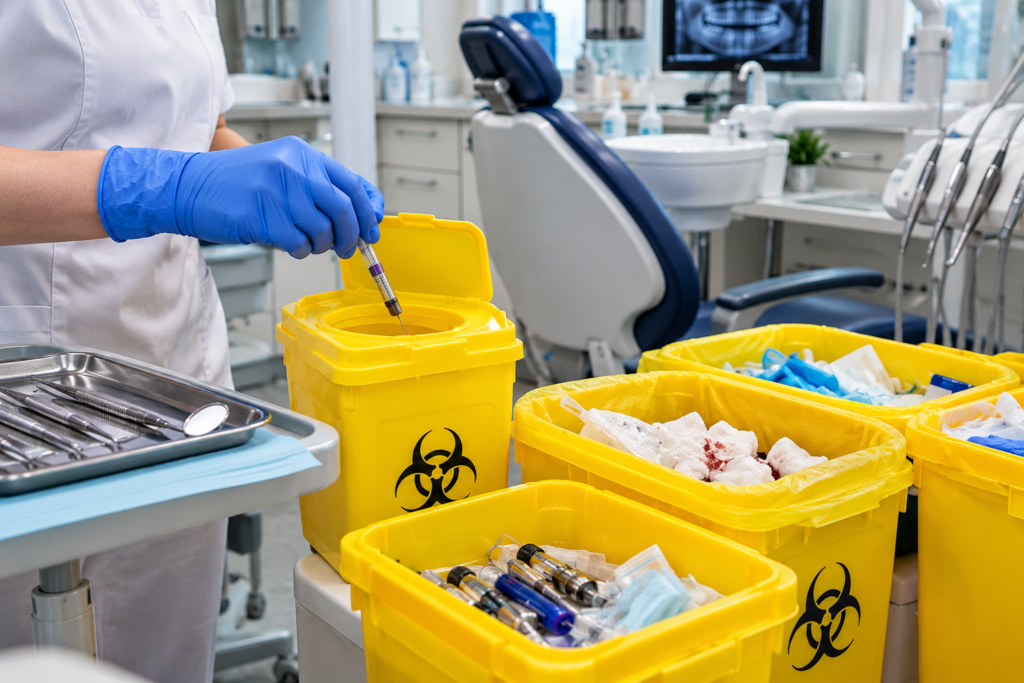
What Is Dental Clinic Waste Management
Dental clinic waste management is the full chain of handling waste from a dental practice: sorting at the chair, storing safely on site, collection by a licensed contractor, treatment or destruction, and record-keeping that proves it all happened.
A typical clinic generates several streams:
- Sharps: needles, scalpel blades, burs, endodontic files, matrix bands, and broken instruments.
- Infectious waste: gloves, gauze, cotton rolls, suction tips, and other items contaminated with blood or saliva.
- Amalgam waste: scrap amalgam, capsules, chairside trap and vacuum filter contents, and separator residue.
- Pharmaceutical waste: expired or unused anesthetics, medicines, and related products.
- Chemical waste: disinfectants and, in clinics still using film radiography, X-ray developer and fixer.
- General waste: packaging, paper, and non-contaminated items.
Each stream carries a different risk and often a different disposal route.
Why Dental Waste Management Matters in Dubai
Dubai’s framework requires medical waste to be segregated at source and collected under contract by a company approved through Dubai Municipality’s Public Health Department. Mixing medical and general waste breaches the facility requirements set by the Dubai Health Authority and the wider medical waste rules. Inspectors can also ask to see your records.
Safety is the first reason to care. Needlestick injuries put dental assistants, cleaners, and waste handlers at risk of infection. Mercury from amalgam harms the environment if it reaches the drains.
Reputation is the second. Patients notice how a clinic handles hygiene, and a failed inspection or a licence issue is expensive and public.
Finally, there is simple practicality. A clinic with a clear waste routine runs smoother, with fewer spills, fewer overflowing bins, and less stress at audit time.
Key Benefits of Getting It Right
Staff protection. Proper sharps handling and containers cut injury risk for your whole team.
Inspection readiness. A register, certificates, and labeled storage show inspectors a controlled operation.
Environmental responsibility. Separating amalgam and chemical waste keeps heavy metals and chemicals out of drains and landfill.
Lower hidden costs. Correct segregation avoids sending general waste through the more expensive medical stream.
Patient trust. A clean, organized approach to waste supports the infection-control image of your clinic.
Common Problems and Challenges
Overfilled sharps containers. Staff keep pushing needles into a full container, which creates exactly the injuries the container exists to prevent.
Mixing streams. Contaminated gloves in general bins, or clean packaging in infectious bags, either break the rules or inflate costs.
Mishandled amalgam. Rinsing amalgam into a sink or throwing capsules into ordinary waste is a common slip, especially in busy clinics without clear labels.
Extracted teeth. Teeth are human tissue, and those with amalgam fillings add a mercury issue. Many clinics are unsure where they belong, so ask your contractor and follow the guidance you are given.
Expired stock. Anesthetic cartridges and medicines pile up in cupboards until someone notices, which creates a storage and compliance problem.
Weak records. Waste leaves the clinic, but the paperwork does not exist when an inspector asks.
Heat and storage. In Dubai’s climate, infectious waste stored in warm conditions can smell and degrade fast, so storage needs a cool, shaded, controlled space.
Important Factors to Consider
Volume and frequency. A busy multi-chair clinic needs more frequent collection than a small practice. Collection should match how fast your waste storage fills, not a generic calendar.
Container quality. Use puncture-resistant sharps containers and clearly labeled, color-coded containers for each stream. Follow Dubai’s color-coding requirements, and see our guide on color coding in medical waste management for details.
Storage area. Keep a designated, ventilated, labeled space with restricted access, away from patient areas and public view.
Contractor approval. Confirm that your waste company is approved to collect and transport medical waste in Dubai, and ask what documentation you will receive after each collection.
Amalgam handling. Check that your clinic has the right equipment, such as chairside traps and an amalgam separator where required, and that your contractor can handle or route amalgam waste properly.
Staff training. Everyone who touches waste, including cleaners and reception staff who move bins, needs to know the rules.
Best Practices and Expert Recommendations
Segregate at the chair. Place the right containers within arm’s reach of each treatment room so staff sort as they work, not afterward.
Never recap needles by hand, and use one-handed or device-assisted techniques. Replace sharps containers before they are completely full. A common rule of thumb is to close and replace when about three-quarters full.
Keep amalgam waste in dedicated, labeled, airtight containers, away from other streams. Do not flush it down sinks, and keep chairside traps and vacuum filters maintained and emptied on schedule.
Review your cupboards monthly. Remove expired anesthetic cartridges and medicines and place them in your pharmaceutical waste stream so stock never builds up.
Keep a waste register. Record the type and approximate quantity of each stream, and file disposal certificates by date. Inspectors can request these on demand.
Train new staff during induction, and run a short refresher once or twice a year. Post simple color and label guides at waste points.
Store waste in the coolest practical place. Heat speeds odor and bacterial growth, so avoid leaving bags in warm corridors, car parks, or direct sun.
Finally, agree a collection schedule with your contractor and review it when your patient volume changes, for example after adding a chair or extending hours.
How Professional Services Help
A professional medical waste collector removes the part most clinics find hardest: the chain after the waste leaves your door. They supply appropriate containers, collect on a regular schedule, transport medical and hazardous waste in line with Dubai requirements, and send it for treatment or destruction.
They also give you paperwork. Disposal documentation after each collection supports your register and your inspection file. And an experienced provider will spot problems you may not, such as overfilled containers, mixed streams, or unlabeled bags, and help you fix them.
For clinics that also generate pharmaceutical waste, using one provider for both streams keeps scheduling and records simple.
Why Choose Globalex
Globalex provides medical, clinical, and pharmaceutical waste collection across Dubai, working with clinics, pharmacies, laboratories, and hospitals. We understand what dental practices generate and structure collection around your actual volume, whether that is a single-chair clinic or a multi-specialty dental center.
Every collection comes with documentation for your records, and waste goes through licensed disposal channels. We provide clear quotes, flexible schedules, and practical advice on segregation, so your team is not guessing at the chair.
Our broader work for major names including Emaar, Dubai Properties, and Dubai Municipality means we are used to meeting strict standards and schedules, and we bring that discipline to healthcare clients of every size.
Our Service Process
- Contact us with your clinic type, number of chairs, and the waste streams you generate.
- We review your volumes and recommend containers and a collection schedule.
- Our trained team collects waste on schedule, following correct handling procedures.
- Waste is transported and disposed of through licensed channels.
- We provide documentation after each collection and adjust the schedule as your clinic grows.
Frequently Asked Questions
Can a dental clinic in Dubai put medical waste in general waste bins?
No. Medical waste must be segregated at source and collected under contract by an approved company. Mixing it with general waste breaches Dubai’s requirements.
What counts as medical waste in a dental clinic?
Sharps, contaminated gloves and gauze, suction tips, extracted teeth, expired medicines, and amalgam waste all need controlled handling, with some streams routed differently from others.
How should dental clinics dispose of amalgam waste?
Keep it in labeled, airtight containers separate from other streams, never flush it into drains, and ask your contractor how it is collected and routed.
How often should a dental clinic schedule waste collection?
It depends on volume. Many clinics use weekly or bi-weekly collection, while busier practices need more frequent pickups. Review it whenever your patient volume changes.
What records do dental clinics need to keep?
A register of the nature and quantity of waste generated, plus disposal certificates from your contractor. Inspectors can ask to see them.
When should a sharps container be replaced?
Before it is completely full. A common practice is to close and replace it when it reaches about three-quarters full.
Can Globalex collect pharmaceutical waste from my dental clinic too?
Yes. We collect clinical and pharmaceutical waste together, which keeps scheduling and documentation in one place.
Conclusion
Dental waste is varied, and each stream carries its own risk. Sorting at the chair, storing safely, keeping a clear register, and working with a licensed collection partner protect your staff, your patients, and your clinic’s standing with inspectors.
Start with the basics: the right containers at every treatment room, a trained team, and a collection schedule that matches your volume.
Call to Action
Need dependable waste collection for your dental clinic in Dubai? Call Globalex at +971-55-9286666, message us on WhatsApp, or request a free quote at globalexuae.com. Tell us your clinic size and waste streams, and we will set up a collection schedule with full documentation.

