

Pharmaceutical Waste Disposal in Dubai: What Pharmacies and Clinics Need to Know
Pharmacies, clinics, and hospitals across Dubai handle a category of waste that most other businesses never have to think about: expired medications, contaminated packaging, and pharmaceutical residues that cannot simply go into a regular waste bin. Pharmaceutical waste disposal in Dubai is tightly regulated, and for good reason, since improperly discarded medications can contaminate water systems, pose exposure risks to waste handlers, and create serious liability for the healthcare facility responsible. This guide covers what qualifies as pharmaceutical waste, how it should be handled, and how licensed disposal protects your facility.
What Is Pharmaceutical Waste Disposal
Pharmaceutical waste disposal is the specialized collection, transport, and destruction of expired, unused, or contaminated medications and related materials generated by pharmacies, clinics, hospitals, and other healthcare facilities. This includes expired tablets and capsules, liquid medications, vaccines, cytotoxic drugs, and packaging contaminated with pharmaceutical residue. Because these materials can be chemically active, environmentally harmful, or in some cases controlled substances, they require handling procedures distinct from general clinical or municipal waste, along with disposal at facilities specifically licensed to destroy pharmaceutical materials safely.
Why Pharmaceutical Waste Disposal Matters
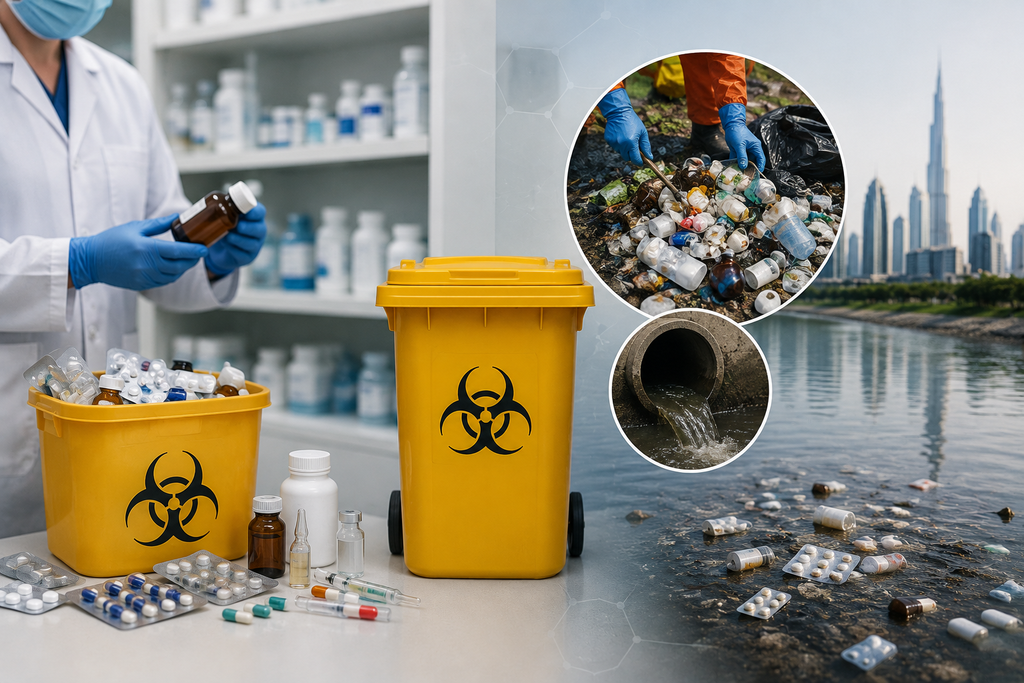
Medications that end up in regular waste streams or, worse, are flushed down drains, can leach into water systems and soil, affecting both the environment and public health over time. For healthcare facilities, improper disposal also creates direct legal exposure, since Dubai Health Authority and related regulatory bodies require documented, compliant handling of pharmaceutical waste as part of a facility’s operating license. Beyond regulation, there is a reputational dimension: patients and partners expect healthcare providers to manage this responsibility correctly, and a compliance failure can damage trust built over years of operation.
Key Benefits of Professional Pharmaceutical Waste Disposal
A licensed disposal partner ensures your facility meets Dubai Health Authority and Municipality requirements without your staff needing to become experts in waste regulation themselves. Proper disposal also protects staff and the public from accidental exposure to potentially hazardous or controlled substances, particularly with cytotoxic medications that require extra handling care. For pharmacies managing regular stock turnover, a scheduled collection service prevents expired medications from accumulating in storage, freeing up space and reducing the operational burden of managing waste internally.
Common Problems and Challenges
A common issue in pharmacies and small clinics is uncertainty about which medications require special handling versus which can be treated as general clinical waste, leading to inconsistent segregation practices. Larger facilities often struggle with volume and frequency, particularly hospitals and diagnostic centers generating pharmaceutical waste continuously, which requires a dependable collection schedule rather than occasional pickups. Some facilities also face storage challenges, since certain pharmaceutical waste categories require specific containment conditions between generation and collection, and inadequate storage increases both safety and compliance risk.
Important Factors to Consider
Confirm your disposal partner is licensed specifically for pharmaceutical and clinical waste, not just general commercial waste collection, since the regulatory requirements differ significantly. Ask about their segregation guidance, since a good partner will help your staff correctly separate pharmaceutical waste from sharps, general clinical waste, and regular trash at the source. Consider collection frequency carefully based on your facility’s size and turnover, since infrequent collection increases on-site storage burden while overly frequent collection may be unnecessary for smaller operations. Documentation is also critical, so ask what records you will receive to demonstrate compliance during inspections.
Best Practices and Expert Recommendations
Train pharmacy and clinical staff to segregate pharmaceutical waste at the point of generation using clearly labeled, color-coded containers, rather than sorting everything at collection time. Keep expired medication stock reviews on a regular schedule, monthly for busy pharmacies, so waste does not build up unpredictably and overwhelm storage capacity. For larger healthcare facilities, it is worth setting up a recurring collection contract tied to your average waste generation volume, which keeps costs predictable and avoids emergency collection situations. Always retain disposal documentation in an organized, easily accessible system, since regulatory audits can request records covering extended periods.
How Professional Services Help
A professional pharmaceutical and clinical waste disposal company manages the entire process from collection through licensed destruction, providing the documentation your facility needs for regulatory compliance. They bring the correct containment and transport equipment for handling pharmaceutical materials safely, reducing risk to your staff and the public. Experienced providers also understand the specific requirements set by Dubai Health Authority and related bodies, helping your facility stay ahead of compliance requirements rather than reacting to them.
Why Choose Globalex
Globalex provides medical, clinical, and pharmaceutical waste collection services across Dubai, working with pharmacies, clinics, and healthcare facilities that need dependable, compliant waste management. Our team understands the regulatory landscape healthcare providers operate under and structures collection schedules to match your facility’s actual waste generation, whether that means weekly pickups for a busy pharmacy or a tailored schedule for a larger clinic. Every collection is documented and disposed of through licensed channels, giving your facility a clear compliance record.
Our Service Process
- Contact us with your facility type and estimated pharmaceutical waste volume.
- We recommend appropriate containment and a collection schedule suited to your operations.
- Our trained team collects waste following proper segregation and handling procedures.
- Waste is transported and disposed of through licensed, compliant channels.
- We provide documentation confirming safe disposal for your regulatory records.
Frequently Asked Questions
What qualifies as pharmaceutical waste? Pharmaceutical waste includes expired or unused medications, contaminated packaging, vaccines, and certain drug residues that require specialized disposal rather than regular clinical or municipal waste handling.
Can pharmacies dispose of expired medication in regular trash? No, expired medications must be collected and disposed of through licensed pharmaceutical waste channels to prevent environmental contamination and regulatory violations.
How often should a pharmacy schedule waste collection? This depends on stock turnover and volume, but many pharmacies find a monthly or bi-weekly collection schedule keeps waste from accumulating between visits.
Does Globalex provide documentation for compliance audits? Yes, we provide disposal documentation after every collection, which facilities can retain for regulatory inspections and audits.
Is pharmaceutical waste disposal different from general clinical waste disposal? Yes, pharmaceutical waste often requires distinct handling due to chemical activity or controlled substance status, separate from sharps and general biohazard clinical waste.
Conclusion
Pharmaceutical waste disposal is a regulatory responsibility that pharmacies, clinics, and healthcare facilities in Dubai cannot afford to handle informally. Proper segregation, scheduled collection, and licensed disposal protect your facility legally, protect staff and the public from exposure risk, and support the broader public health standards that patients rely on when choosing a healthcare provider.
Call to Action
Need reliable, compliant pharmaceutical or clinical waste disposal for your pharmacy or clinic? Call Globalex at +971-55-9286666, message us on WhatsApp, or request a free quote at globalexuae.com.

