

How to Dispose of Pharmaceutical Waste in Dubai Safely
Proper pharmaceutical waste disposal is essential for protecting public health, maintaining environmental safety, and complying with UAE regulations. Hospitals, clinics, pharmacies, laboratories, and healthcare facilities across Dubai generate pharmaceutical waste daily, including expired medicines, contaminated drugs, vaccines, and hazardous pharmaceutical products.
Improper disposal can lead to environmental pollution, groundwater contamination, and serious health risks. This guide explains how pharmaceutical waste should be managed and disposed of safely in Dubai and across the UAE.
What Is Pharmaceutical Waste?
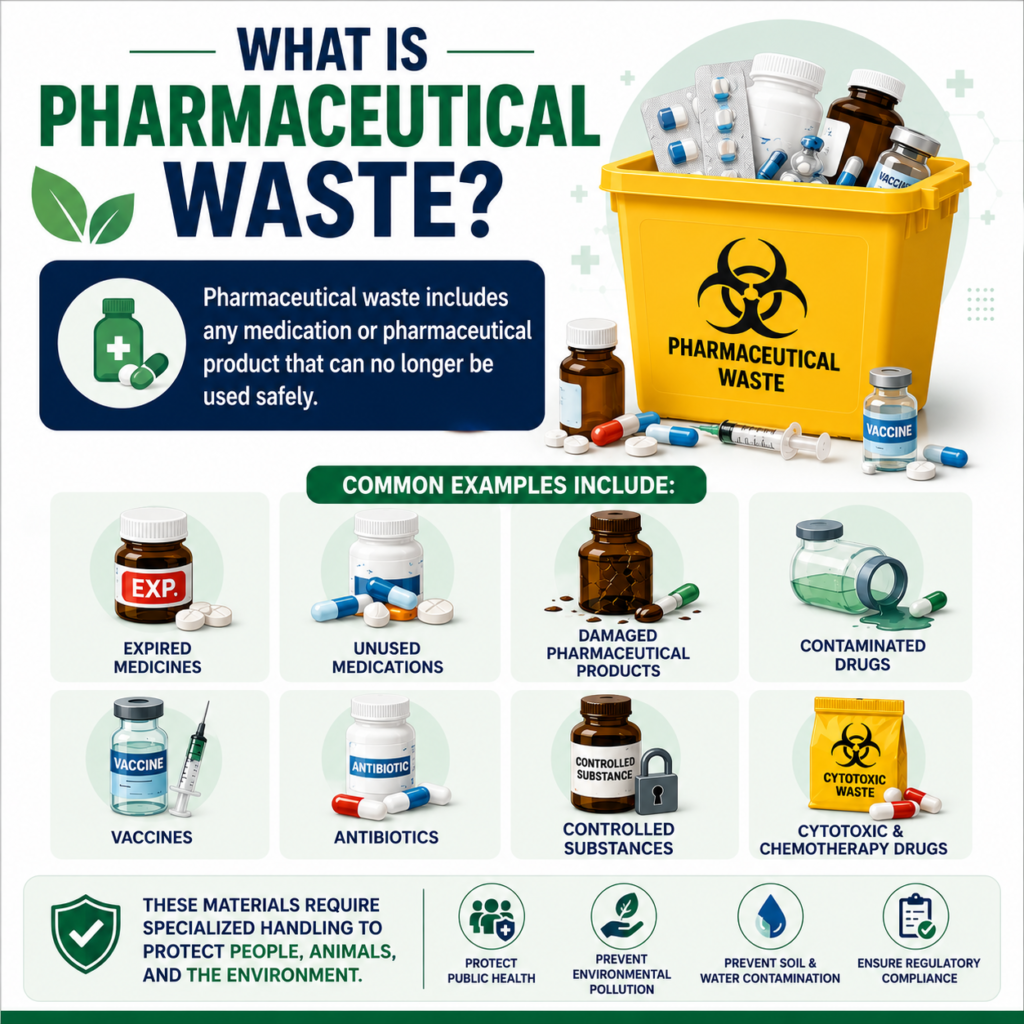
Pharmaceutical waste includes any medication or pharmaceutical product that can no longer be used safely.
Common examples include:
- Expired medicines
- Unused medications
- Damaged pharmaceutical products
- Contaminated drugs
- Vaccines
- Antibiotics
- Controlled substances
- Cytotoxic and chemotherapy drugs
These materials require specialized handling to prevent harm to people and the environment.
Why Proper Pharmaceutical Waste Disposal Matters
Protecting the Environment
Pharmaceutical compounds can contaminate soil, groundwater, and water bodies if disposed of incorrectly. Certain chemicals may remain active for long periods and negatively impact ecosystems.
Protecting Public Health
Improperly discarded medicines can result in:
- Accidental poisoning
- Drug misuse
- Unauthorized access to medications
- Community health risks
Regulatory Compliance
Healthcare facilities and pharmaceutical businesses must follow approved waste management procedures to maintain compliance and avoid penalties.
Types of Pharmaceutical Waste
Non-Hazardous Pharmaceutical Waste
Includes certain over-the-counter medications and non-contaminated pharmaceutical products that still require controlled disposal.
Hazardous Pharmaceutical Waste
Contains toxic or harmful substances that require specialized treatment and disposal.
Controlled Drug Waste
Includes narcotics, opioids, and regulated medications that require secure destruction and proper documentation.
Cytotoxic Waste
Often generated during cancer treatment and requires strict handling and disposal procedures.
How to Dispose of Pharmaceutical Waste in Dubai
1. Identify and Segregate Waste
Separate pharmaceutical waste according to its category:
- Hazardous waste
- Non-hazardous waste
- Controlled substances
- Cytotoxic waste
Proper segregation reduces contamination risks and improves compliance.
2. Use Approved Containers
Store pharmaceutical waste in clearly labeled, leak-resistant containers designed for healthcare waste.
3. Secure Storage
Waste should be stored in designated areas accessible only to authorized personnel until collection.
4. Arrange Collection by Licensed Providers
Healthcare facilities should work with experienced waste management companies that specialize in pharmaceutical and medical waste handling.
5. Safe Transportation and Disposal
Waste must be transported, treated, and disposed of using approved methods. High-temperature incineration is commonly used for hazardous pharmaceutical waste.
Can Pharmaceutical Waste Be Thrown in Regular Trash?
No.
Expired medicines and pharmaceutical products should never be placed in standard waste bins. Doing so may cause environmental contamination and create public health risks.
Can Medicines Be Flushed Down the Drain?
No.
Flushing medicines into sinks or toilets can introduce pharmaceutical compounds into water systems, potentially affecting groundwater and aquatic ecosystems.
Best Practices for Healthcare Facilities
To ensure compliance and safety, healthcare facilities should:
- Train staff on waste handling procedures
- Maintain proper disposal records
- Conduct regular waste audits
- Use licensed waste management providers
- Follow approved segregation and storage practices
Pharmaceutical Waste Disposal Across the UAE
Healthcare facilities in Dubai, Abu Dhabi, Sharjah, Ajman, Ras Al Khaimah, Fujairah, and throughout the UAE must manage pharmaceutical waste responsibly.
As environmental standards continue to evolve, proper waste management remains essential for healthcare organizations seeking to maintain compliance and protect public health.
Frequently Asked Questions
What is pharmaceutical waste?
Pharmaceutical waste includes expired, unused, contaminated, or unwanted medications and pharmaceutical products.
Is pharmaceutical waste hazardous?
Some pharmaceutical waste is hazardous depending on its chemical composition and potential risks.
Can expired medicines be thrown away?
No. Expired medicines should be disposed of through approved pharmaceutical waste management channels.
Who generates pharmaceutical waste?
Hospitals, clinics, pharmacies, laboratories, and pharmaceutical companies generate pharmaceutical waste.
Why is pharmaceutical waste dangerous?
It can contaminate the environment, affect water quality, and create health risks if improperly managed.
Why Choose Globalex UAE?
✔ Professional pharmaceutical waste management solutions
✔ Safe collection and transportation services
✔ Compliance-focused disposal procedures
✔ Fast response and scheduled collections
✔ Support for healthcare facilities across the UAE
✔ Environmentally responsible waste management practices
Need reliable pharmaceutical waste disposal services
in Dubai?
Contact Globalex UAE today for a free consultation and customized waste management solution.

